Europe's Polymathic Advantage: Policy Solutions for Competitiveness
- Aksinya Staar
- Jun 8, 2025
- 11 min read

Updated: Jun 12, 2025
A New Intellectual Paradigm for Europe

In an age marked by cascading polycrises and intensifying geopolitical rivalry, Europe’s resurgence as an innovation powerhouse will not be achieved through reactive measures alone. Instead, it requires a bold renaissance — a radical reawakening of its polymathic heritage. The spirit of the Renaissance, when visionaries like Leonardo da Vinci seamlessly fused art, science, and technology, offers more than historical inspiration, it provides a blueprint for a contemporary revolution. As the Draghi report underscores, Europe’s current innovation lag is not merely a funding gap, but a consequence of rigid specialization and fragmented systems. The remedy lies beyond increased investment. What’s needed is a systemic pivot towards polymathic innovation — an ecosystem where disciplines converge, ideas collide, and transformative breakthroughs are born.
Competitiveness has become Europe’s new mantra, a rallying cry in an era of turbulence and geopolitical tension. It’s a powerful stimulant, driving nations to strive for excellence. But let’s not forget: narratives shape reality. The challenge with competitiveness is that it’s often fueled by external pressures – today, Europe finds itself competing with the U.S. and China. While this external motivation can be effective, it also generates pressure and tension. Humans experience this often on an individual level. Research, however, consistently shows that intrinsic motivation – the drive that comes from within – is far more powerful because it stems from inspiration rather than obligation. What if Europe could tap into that intrinsic force binding it with the external motivation? The results could be astonishingly productive.
History tends to move in spirals, and Europe’s past offers a blueprint for renewal. The continent’s rise to global prominence was fueled by the Industrial Revolution, a period defined by technological innovation, scientific discovery, and an unrelenting pursuit of efficiency. This industrial mindset transformed Europe from agrarian economies into industrialized powerhouses, laying the foundation for economic and geopolitical dominance. But it also sowed the seeds of today’s challenges.
Before the Industrial Revolution, however, came the Renaissance – a cultural and intellectual awakening rooted in Humanism and the belief in humanity’s boundless potential. This era of polymathy (from the Greek polys, meaning “many,” and mathēma, meaning “learning”) saw figures like Leonardo da Vinci excel across disciplines, sparking scientific, financial, and artistic advancements that shaped modernity. Renaissance created the intellectual, economic, and technological environment that made the Industrial Revolution possible. Renaissance polymaths reshaped the way we think, create, and build. Leonardo, Galileo, Bacon, Kepler, Copernicus, Erasmus, Dürer, More – these minds turned humanism into a driving force for discovery, bridging art, science, and technology. Europe once thrived on polymathic innovation. Today, Europe has the opportunity to reignite this spirit – but on a grander scale.
This is also where posthumanism enters the conversation as a timely and necessary companion to the idea of a second European Renaissance. Posthumanism, a philosophical and cultural stance that questions traditional human exceptionalism and embraces the co-evolution of humans with the rest of nature and ecosystems, technology, and other intelligences, aligns powerfully with today’s innovation frontiers. Just as the original Renaissance expanded our view of human potential, posthumanism expands the very boundaries of what it means to be human – reimagining our roles in complex, interdependent systems. It challenges us to think beyond anthropocentric limitations and invites polymathic innovation that spans not just disciplines, but species, systems, and interfaces. In this sense, adopting a posthumanist lens could open an entirely new dimension of innovation for Europe – one that is ecological, ethical, and radically inclusive. If the Renaissance unlocked the scientific revolution, posthumanism could unlock a new leap for humanity – one deeply grounded in integrated, polymathic thinking.
What is polymathic innovation?
One of the key critiques of modern Europe, as highlighted in the Draghi report, is its persistent innovation deficit. The report reveals that Europe’s research and development spending lags far behind global competitors like the United States and China. While the European Union has long aimed to invest 3% of its GDP in innovation, this target remains unmet, creating a significant technological and economic gap.
The solution, however, lies not in merely increased funding but in a radical reimagining of how we approach innovation. Ironically, the industrial mindset that once propelled Europe to greatness now holds it back. In an age of polycrisis – where challenges are interconnected and solutions require holistic thinking – siloed structures and narrow specialization are no longer sufficient. True innovation happens at the intersection of disciplines, where unexpected combinations of knowledge spark breakthroughs. And often, it even creates new disciplines. Metastudies show that the most transformative ideas emerge when diverse fields collide, creating solutions as multifaceted as the problems they address. Polymathic innovation moves beyond multidisciplinarity (where experts work in parallel) and interdisciplinarity (where fields negotiate between each other). Instead, it rewires the process entirely, integrating knowledge in ways that spark radical new approaches. Polymathic solutions are holistic and adaptive.
Polymathic innovation operates on two levels: unlocking individual versatile talent and driving systemic transformation.
At the individual level, it recognizes the potential of polymathic professionals – individuals who are masters across multiple domains, from economics and biology to technology and sociology. These modern polymaths bridge disciplines, connecting dots that specialists often overlook. Their expertise spans diverse fields: one may combine design, engineering, and philosophy, while another might work at the intersection of physics, AI ethics, and communication. Some bring together finance, sociology, and art, while others integrate medicine, economics, and policy. Europe is rich with such talent – it simply needs greater recognition and engagement, especially in areas vital to innovation.
At the systemic level, polymathic innovation reshapes how we approach today’s deeply interconnected challenges. Climate breakdown, digital and AI adoption, demographic shifts, and geopolitical instability require solutions that span multiple disciplines. Yet, siloed expertise falls short. The shift from an industrial to a polymathic mindset is necessary. It moves innovation beyond rigid specialization toward deep integration and adaptive problem-solving. Polymathic solutions anticipate ripple effects and ensure breakthroughs translate into real-world impact. Take biotechnology, for example. It must integrate with social care, ethics, and urban planning to drive meaningful change. Unlike traditional models that react to crises, polymathic teams innovate in real time, seeing connections others miss. This is the future of innovation – not merely solving problems but shaping the systems in which those solutions emerge.
Policymakers, too, stand to benefit from a polymathic approach. The impact and depth of their work could be significantly enhanced by introducing polymathic training programs tailored to their needs. Rather than limiting their education to traditional policy frameworks, these programs could integrate diverse disciplines such as neuroscience, philosophy, art history, complexity theory, futures & foresight, and systems theory. Such an approach would empower future leaders to transcend the confines of their specialized expertise, enabling them to craft policies that are more holistic and adaptive. A deeper understanding of human behavior, cultural contexts, and the broader implications of technological advancements within complex social systems would better equip policymakers to address multifaceted challenges.
Polymathic innovation as Europe’s strategic asset
A polymathic strategy that crosses traditional disciplinary boundaries can transform Europe’s perceived weaknesses into unique strengths. Drawing from its rich Renaissance heritage, Europe can forge an innovation ecosystem that combines diverse expertise, encourages cross-sector collaboration, and prioritizes holistic, creative problem-solving. This vision echoes recent calls by EU leadership for a “Competitiveness Deal for Europe,” placing talent, technology, and resilient ecosystems at the heart of future growth. Polymathic thinking provides the cognitive infrastructure for such a deal — ensuring that competitiveness becomes regenerative, not extractive.
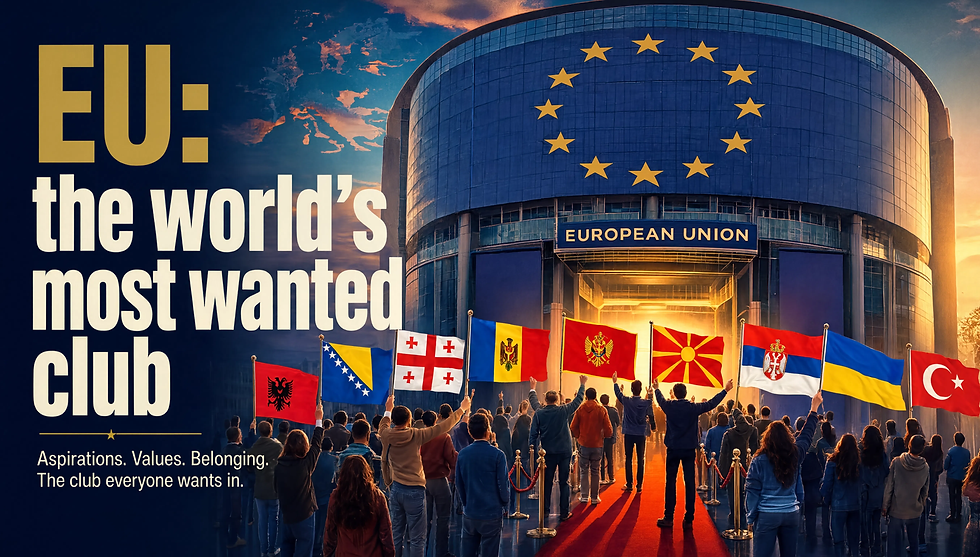
Adopting the polymath mindset could help Europe tackle brain drain and the global talent race. Instead of merely trying to outcompete the U.S. in attracting international talent (a goal paradoxically gaining urgency amid Trump’s restrictive policies targeting American universities) Europe might do better by nurturing the untapped potential within its own borders. This requires dismantling silos between disciplines, fostering interdisciplinary collaboration, and promoting curiosity, life-wide learning (LWL) and lifelong learning (LLL) – hallmarks of polymathic thinking. The transformation should begin with education, where reforms can nurture creativity and transdisciplinary thinking from an early stage. For example, the University of Applied Arts Vienna’s Cross-Disciplinary Strategies program integrates art, science, philosophy, and global challenges, preparing students to address complex societal issues. Scaling such initiatives across Europe would cultivate versatile professionals equipped to tackle complex challenges. This shift aligns with the EU’s goals of resilience and strategic open autonomy, positioning Europe as a global innovation leader. One important shortcut could be the accelerated integration of Ukraine into the European Union. Ukraine’s resilience, creativity, and innovative momentum — honed under extraordinary pressure — are already contributing to Europe’s broader innovation landscape. Embedding this drive within the EU system would amplify Europe’s overall competitiveness and adaptive capacity.
True innovation is inherently polymathic, drawing from multiple domains and tackling problems from diverse angles. However, much of today’s innovation, especially in tech and biochemistry, remains siloed. This fragmentation poses significant challenges to the development and application of groundbreaking technologies across various fields. For instance, technological advancements often overlook social implications, while healthcare innovations may miss opportunities to integrate cutting-edge technology. Polymathic innovation calls for a return to an interconnected approach, where knowledge and expertise are shared rather than isolated. This will not only secure an unprecedented innovation boom but also ensure inclusive thriving, aligned with European values.
Europe’s greatest untapped resource is its human talent. With 27 EU and other European countries, each bringing unique perspectives, expertise, and creative capacities, the continent boasts an unparalleled innovation ecosystem. The challenge lies in creating the systemic conditions needed to unlock this potential. Strengthening the European Single Market is a critical first step, but practical implementation requires more. Policymakers must prioritize education reform to foster polymathic thinking, design funding mechanisms that encourage cross-sector collaboration, and create innovation frameworks that bring together diverse stakeholders.
Imagine research projects that intentionally unite academia, business, government, civil society, artists, technologists, and social scientists. In some cases, even involving cross-sections of ordinary people — through citizen science, citizens’ assemblies, or other democratic mechanisms of participation. Such deliberately diverse teams could generate solutions far more sophisticated and holistic than those produced by siloed approaches. Encouragingly, there are already signs of progress. The European Innovation Council’s 2025 work program, for instance, allocates €262 million to the EIC Pathfinder, supporting multidisciplinary research teams in pursuing visionary breakthroughs. Initiatives like these could serve as stepping stones toward a more polymathic approach to innovation.
An illustration of this approach is Brainport Eindhoven, often called the most innovative city in Europe. It embodies polymathic innovation through its Triple Helix model, where industry, academia, and government work together to drive both technological and societal progress. The region blends high-tech systems, materials, automotive, and design into one dynamic ecosystem. Its additive manufacturing hub, with over 70 suppliers, shows the strength of multidisciplinary collaboration. However, soon after Brainport was established, it became clear that today’s global challenges demand more.
In the early 2010s, the Quintuple Helix model emerged – an evolution that goes beyond civil society (added in the Quadruple Helix) to include Nature itself as a stakeholder. This shift marks not only a structural expansion but also a philosophical one – echoing the posthumanist view that innovation must no longer be solely human-centered, but entangled with the more-than-human world. The five helices include: Academia (Education system) – universities and research institutions generating knowledge. Industry (Economic system) – businesses and the private sector applying knowledge to create products and services. Government (Political system) – policies, regulation, and public funding shaping innovation landscapes. Civil Society (Media and Culture-based public) – the cultural and societal context, including public opinion, NGOs, and media influence. Environment (Nature) – ecological systems and sustainability challenges that must inform innovation choices. The power of the Quintuple Helix is in adding two crucial dimensions, social innovation and solutions that already exist in nature. The latter includes drawing on biomimicry and collaborating with non-human species and ecosystems to inspire and co-create new forms of innovation. After all, with billions of years of innovation behind it, Nature offers us countless answers – freely available and often overlooked. In EU policy, the polymathic nature of the Quintuple Helix framework stimulates regional innovation by investing in multidisciplinary initiatives to enhance competitiveness and by developing specialized hubs that concentrate expertise and streamline supply chains.
Speaking of competitiveness, it’s interesting to see how countries like the U.S. and China are already embracing polymathic approaches to education and innovation. The U.S.'s global success is largely driven by technological and business innovation – both deeply rooted in a polymathic approach. Though rarely proclaimed, this mindset underpins many of the country’s most forward-thinking achievements. Its long-standing tradition of liberal arts education fosters interdisciplinary thinking, a trait reflected in its corporate leadership – over a third of S&P 500 CEOs hold liberal arts degrees. But this versatility isn’t new. Thomas Edison’s Menlo Park “Invention Factory” in 1876 exemplified polymathic innovation. He built a team of artisans, scientists, and engineers who worked relentlessly – experimenting by day, reciting poetry and singing at midnight. This fusion of practical skill and theoretical insight didn’t just produce the lightbulb. The lightbulb was just the breakthrough – true innovation required Edison’s team to build the entire electrical infrastructure, from generators to fire safety to the utility industry. This transformed modern life. Eighty years later, the U.S. scaled this model into DARPA, the U.S. Defense Advanced Research Projects Agency, a powerhouse of radical innovation. By recruiting “hybrid thinkers” and forcing biologists, AI researchers, and material scientists into high-stakes, cross-disciplinary challenges, it pioneered breakthroughs like the internet (ARPANET) and mRNA vaccines – decades ahead of their time. DARPA made experts think like polymaths.
China, too, is now aggressively pushing for interdisciplinary learning through its "Double First Class" initiative, fueled by massive funding. Universities are building interdisciplinary research hubs, and AI giants like Deepseek are actively recruiting talent from fields like literature and social sciences to drive innovation. This deliberate blending of disciplines is a calculated move in China’s playbook to dominate the global tech race.
Meanwhile, India, the world’s largest (1.4 billion people) democracy and a rising economic powerhouse, is betting big on multidisciplinary education through its National Education Policy 2020. With plans to launch 35 multidisciplinary universities and an Academic Bank of Credits, India is breaking down silos and encouraging students to explore across fields and institutions. It’s a bold, forward-thinking approach that reflects the country’s ambition to harness diverse knowledge for growth.
And then there’s Europe. While it has some initiatives in this direction, they lack the strategic focus and scale seen in China or India. It could be time to catch up.
The Competitiveness Compass, building on the Draghi report, highlights the urgency of addressing Europe’s innovation and competitiveness challenges – an approach that aligns closely with polymathic thinking. The Compass aims to nurture Europe’s inherent strengths, harness its resources, and remove barriers at both European and national levels. Polymathic innovation thrives where disciplines, industries, and perspectives intersect, making this mindset essential for Europe’s transformation.
The Horizontal Single Market Strategy can play a crucial role by enabling seamless collaboration across science, technology, industry, humanities, and the arts. By lowering intra-EU barriers and modernizing governance, it fosters a more dynamic and interconnected innovation ecosystem.
The Union of Skills stands to gain significantly from a polymathic strategy, as polymaths bring essential superskills – rapid and continuous learning, adaptability, creativity, and analytical thinking – all of which are among today’s most in-demand capabilities. However, realizing this potential requires a shift beyond the current STEM-focused approach, which risks reinforcing a siloed industrial mindset. Moving from STEM (Science, Technology, Engineering, Mathematics) to STEAM (adding Arts, also representing humanities and social sciences) integrates creativity with technical expertise. The latter, as a key driver of innovation, fuels ideation through experimentation and out-of-the-box thinking – qualities that flourish at the intersection of science and art. Notably, collaborations between artists and scientists have led to bio-art projects that inspire breakthroughs in materials science and biology. Artistic talent has long been one of Europe’s strengths, and its cultivation will be crucial for future innovation, serving as a vital source of inspiration – exemplified by Thomas Edison’s lab.
To develop the next generation of polymathic leaders, programs such as dual PhDs – combining fields like, for instance, technology and social sciences or humanities – or apprenticeships rotating professionals through multiple domains can be instrumental. The EU could also fund outcome-based hybrid research grants for projects integrating at least three deep disciplines (e.g., "Neuroeconomics + AI + Urban Design"). Additionally, Europe can spark natural synergies and bold ideas through platforms for knowledge fusion, such as innovation hubs where experts from diverse fields collaborate. A broader set of policy measures could further reinforce this strategic direction.
This will require a shift in strategy – moving beyond the current approach, which reinforces a siloed industrial mindset. It also means evolving toward more inclusive, non-anthropocentric models of knowledge – where learning is not only cross-disciplinary, but also post-disciplinary and posthumanist, recognizing the role of non-human intelligence, ecosystems, and ethical entanglements in shaping our future. This transition aligns with the European Commission’s evolving definition of competitiveness — its economic output and the ability to deliver well-being for all, build strategic autonomy, and lead in green and digital transitions. A polymathic Europe is well positioned to deliver on this broader vision. Europe’s leadership in climate innovation, ethical AI, and circular economy models makes it the ideal birthplace for a new kind of competitiveness — one that is regenerative, culturally grounded, and future-facing.
As the birthplace of humanism, Europe has long shown how a strong philosophical foundation can drive cultural and civilizational flourishing. Today, we have the chance to carry this heritage into a new spiral of development – with humanism evolving into posthumanism, coupled with a revived European polymathic tradition, positioning Europe for true leadership on a planetary scale. To drive this transformation, Europe needs a compelling vision – an inspiring European Renaissance narrative as a continuous, intrinsic force for coping with growing challenges and, ultimately, for thriving.
The time for the second European Renaissance is now.


Comments